How to Start Day Trading From Scratch With a Simple Two-Step Plan Anyone Can Follow
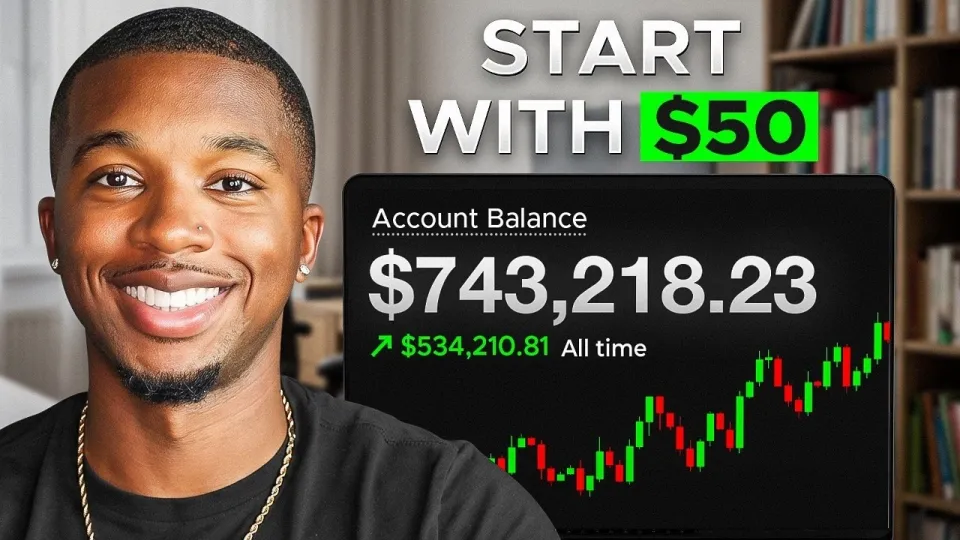
Video: Easiest Way To Start Day Trading From Scratch (Exactly What I Did)
Need articles like this for your video? They help promote it on YouTube and Google — order them in the Telegram bot @sat_sit_bot. It writes articles around your video, embeds the video and publishes them on popular niche websites (no ads). Your first 50 articles are free.
· based on the channel Jooviers Gems
Key takeaways
- Day trading means opening and closing positions inside the same session, so every trade is a small, repeatable process rather than a long-term bet.
- Beginners only need two things to start: a market that fits their schedule and one setup they can recognize on a chart without guessing.
- Risk per trade should be a fixed small percentage of the account, decided before entry, not after the position moves against you.
- Backtesting and demo trading come before real money, because screen time builds pattern recognition faster than any paid course.
- Prop firm evaluations let traders access larger capital than a small personal account, but the same risk rules still apply.
Day trading from scratch starts with narrowing everything down to two decisions: which single market you will watch every day, and which single setup you will trade until it becomes boring. Everything else — indicators, chat rooms, funded accounts — is an add-on you layer in later, not a prerequisite. Jooviers Gems breaks this same beginner path down in his video, and the walkthrough below follows that logic while giving you the exact steps, numbers and habits to put it into practice. If you want the author's own trade-by-trade breakdowns alongside it, they live in his Inner Circle membership.
What Day Trading Actually Is and Why Beginners Overcomplicate It
Day trading is the practice of entering and exiting positions within a single trading session, so you never carry overnight risk and never depend on a company's long-term story. Because the holding period is short, the outcome of any one trade is mostly noise — what determines your results over a month is whether your average winner is bigger than your average loser and whether you repeat the same process consistently. Beginners usually fail not because the strategy is too simple, but because they jump between markets, timeframes and indicators every few days, which makes it impossible to tell whether an edge exists. The fix is boring: one market, one setup, one risk rule, tracked in writing.
Choosing Your First Market Without Guessing
Your first market should be chosen by schedule and cost, not by whatever is trending on social media. Three realistic options for a beginner:
- Index futures such as the S&P 500 or Nasdaq contracts. They trade nearly around the clock, have tight spreads and deep liquidity, and a micro contract keeps the dollar risk small enough for a starter account.
- Major forex pairs like EUR/USD. Commissions are low, sessions are predictable, and the London and New York opens give you two clear windows to work with.
- Large-cap stocks during the first 60–90 minutes after the US open. Highest volatility, but also the fastest moves and the widest spreads on small names — stick to the biggest companies if you go this route.
Pick one. Not two. The goal in month one is not profit; it is learning how your chosen market breathes — when volume arrives, how it reacts to news, and how far it typically travels in an hour.
The Only Setup You Need in Month One
A beginner setup needs three things: a clear level, a clear trigger, and a clear invalidation point. A workable template looks like this:
- Level: a price the market has already respected at least twice — a prior session high or low, or an opening range boundary.
- Trigger: a candle closing beyond that level with expanding volume, not just a wick poking through it.
- Invalidation: the price at which your idea is simply wrong, defined before you click buy or sell.
That is the entire framework. No indicator stack, no twelve-timeframe analysis. You are waiting for price to interact with a level you marked in advance, then acting only if the reaction confirms your direction. If the level breaks and immediately reverses, you skip the trade — skipping is a skill, and it is free.
Position Sizing and Risk Rules That Keep You in the Game
Risk control is what separates a trader who survives twelve months from one who blows up in three weeks. The standard beginner rule is to risk a fixed small percentage of your account on each trade — commonly 1% — and to calculate position size from that number rather than from how confident you feel.
Here is the arithmetic: if your account is $2,000 and you risk 1%, your maximum loss per trade is $20. If your stop is 10 points away on a futures contract worth $2 per point, you trade one contract and no more. If the stop needs to be 40 points away, you trade zero contracts at that size — the trade is too wide for your account, so you pass. Do this calculation before entry, every single time, until it is automatic.
Two additional guardrails matter just as much: a daily loss limit (stop trading after two or three losing trades, or after losing 3% of the account) and a rule against adding to a losing position. Both exist to protect you from the one bad session that erases a month of good ones.
Backtesting and Demo Trading Before Real Money
Backtesting means replaying historical charts and recording how your setup performed, trade by trade, without risking anything. Do at least 50 to 100 documented setups on your chosen market before you consider live trading. For each one, log the date, the level, the entry, the stop, the target, and the result — win, loss or scratch. When the sample is large enough, you will know your approximate win rate and average reward-to-risk, which tells you whether the idea is even worth trading.
Demo trading comes next, and it is not optional. Trade your plan on a simulated account for several weeks with the same position sizes you would use in real money. The point is not the fake profit; it is discovering how you behave when a trade goes against you. Most beginners are surprised by how quickly their discipline disappears when a position is 30 points underwater, and it is far cheaper to learn that on a demo account.
How Funded Accounts and Prop Firms Fit Into the Picture
Prop firm evaluations let a trader control capital far larger than their own balance, usually in exchange for passing a profit target while respecting a maximum drawdown and a daily loss limit. The appeal for a small account is obvious: a $50,000 evaluation gives you room to trade properly sized positions without risking your rent money.
The catch is that the rules are strict and the failure rate is high, mostly because traders attempt the evaluation with the same habits that already failed them on a personal account. A funded account amplifies whatever you already are — disciplined or impulsive. Treat an evaluation as a test of your process, not as a shortcut, and only attempt one after you have a documented track record on demo or a small live account.
Common Beginner Questions and Doubts, Answered Plainly
Most of the hesitation beginners express comes down to a handful of recurring worries, and each has a practical answer.
"How much money do I need to start?" Enough to risk 1% per trade without it hurting your life. If losing $20 ruins your week, the account is too small — keep practicing on demo while you save.
"How long until I am profitable?" Expect several months of consistent screen time before results stabilize, and treat the first year as tuition rather than income. Anyone promising faster is selling something.
"Do I need a paid course?" A structured course can shorten the learning curve by removing guesswork, but it cannot replace repetition. Free charts, a journal and 100 backtested setups will teach you more than a stack of unopened PDFs.
"What if I lose my job and need trading to work right now?" That pressure is the single worst condition to learn under, because it forces oversized risk. Build the skill while you have other income, then scale.
Useful Links
- Inner Circle — the author's full trade breakdowns and community
- The Edge Funder — instant funding evaluations
- The Edge Funder Discord community
- Joovier on Instagram
- Recommended forex broker
The Takeaway
Starting day trading from scratch is a sequencing problem, not a talent problem: choose one market, learn one setup, size every position by a fixed risk rule, and prove the idea on historical charts and a demo account before real money touches it. Funded accounts and courses are accelerators you add after the basics are automatic, never substitutes for them. Jooviers Gems lays out this same beginner-first approach in his video, and the discipline he emphasizes — small risk, one setup, written records — is what actually separates traders who last from those who quit. If you want to follow his trades and continue the education in a structured environment, the Inner Circle is where that happens. Start with one market tomorrow morning, log ten setups this week, and let the data tell you what to fix next.
Questions & answers
How much money do I need to start day trading from scratch?
You need enough capital that risking 1% per trade does not affect your daily life. For many beginners that means a few hundred to a few thousand dollars, or a demo account while they save. A micro futures contract or a small forex position lets you practice proper sizing without a large balance.
How long does it take before a beginner becomes profitable?
Realistically, several months of consistent screen time, backtesting and journaling before results stabilize, and often a full year before income is dependable. Progress comes from repetition and review, not from finding a secret setup. Anyone promising fast profits is usually selling a course.
Should I trade futures, forex or stocks as a beginner?
Pick the one that matches your schedule and budget: index futures for near-24-hour access and small micro contracts, major forex pairs for low costs and clear sessions, or large-cap stocks for high volatility during the US open. Trade only one market for the first few months so you can actually learn its behavior.
Do I need a prop firm funded account to start?
No, but a funded evaluation can give a skilled trader access to far more capital than their own balance allows. The rules are strict, including profit targets and drawdown limits, so attempt one only after you have a documented record on demo or a small live account. A funded account magnifies existing habits, good or bad.
Source: Easiest Way To Start Day Trading From Scratch (Exactly What I Did) · Markdown version